
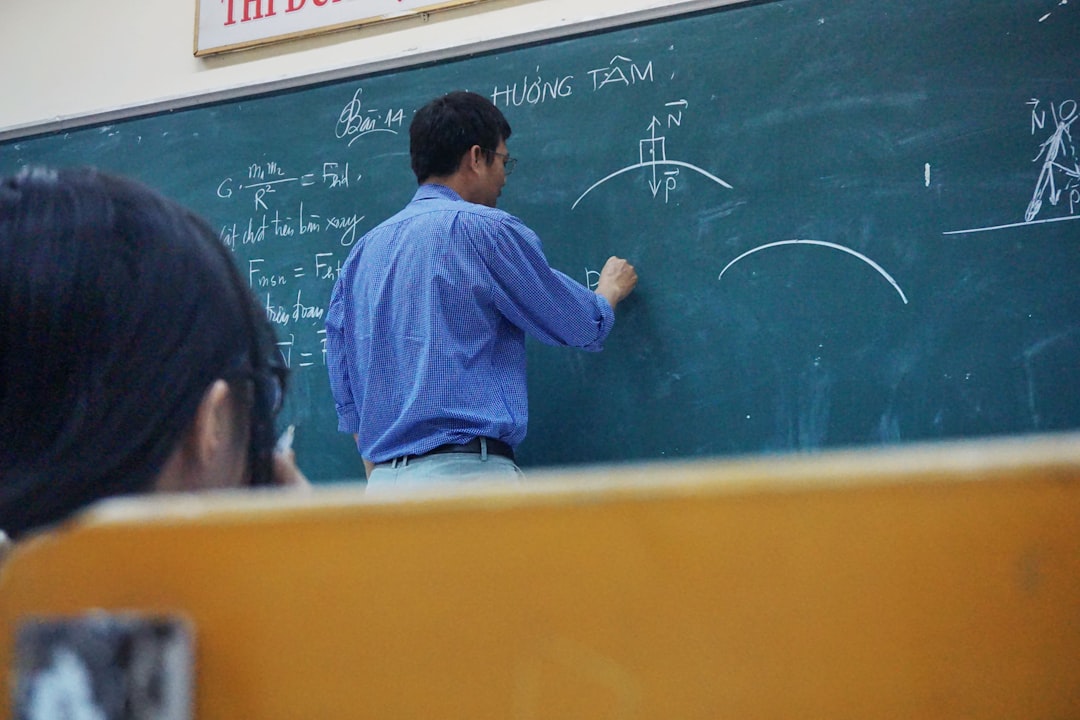
PhD Scholarships for Teachers Who Stay in the Classroom
There is a particular kind of longing that sits beside the exhaustion — the quiet wish to go deeper into the questions your classroom keeps handing you, and the equally quiet dread that pursuing a doctorate might mean leaving the work you love. Sound familiar? We have carried that tension for years: wanting to grow without abandoning the students who need us where we are.
This is not about becoming someone else. It is about finding funding paths that let practicing educators pursue doctoral research while remaining in schools. Below, we walk through scholarships and grants designed for teachers — including part-time models, STEM-specific opportunities, and one practice for shaping a proposal that connects your daily teaching to serious inquiry.
Scholarships That Recognize Teachers as Researchers
Doctoral funding for educators is not a fantasy. Programs exist specifically for people who already hold teaching qualifications and want to research alongside their practice. According to the NWO Doctoral Grant for Teachers, teachers in primary, secondary, vocational, higher vocational, and special education in the Netherlands can receive support for PhD research while employed. Since 2010, the program has funded 699 projects, with two application rounds annually — one in spring and one in autumn — and roughly 23 grants awarded per round from a budget of €5.5 million.
On the Government of the Netherlands portal, the same grant — known as the promotiebeurs — is described clearly: funds go to your employer, not to you directly, to cover the cost of releasing you from part of your teaching load. That design matters. It signals that the goal is to keep you in education while you study.
Beyond Europe, fully funded doctoral opportunities in education exist at major research universities. ProFellow catalogs programs where admitted doctoral students receive full tuition and living stipends for four to six years — including guarantees at institutions like Harvard, Stanford, Penn, Washington University in St. Louis, and NYU Steinhardt. Many of these require full-time enrollment rather than continued classroom teaching, so they represent a different path than the Dutch model. The landscape is wider than most of us assume when we first begin looking.
Pursuing a Doctorate While You Keep Teaching
Part-time doctoral study while maintaining employment is not a single path — it is a set of arrangements that different programs handle differently. The NWO model is among the most explicit. As NWO states, with the PhD grant a replacement teacher can be appointed for a period of maximum five years for half of your contract hours, up to a maximum of 0.4 FTE. Your employer uses the grant to release you from part of your work — at most 40% of your weekly hours — while you remain in your permanent teaching position.
The King's College London STEM Education Teacher Scholarship offers another model for educators in England. Thirteen scholarships are available for the 2026-27 cycle, covering 70% of total tuition fees for a part-time MA in STEM Education over up to two years while teachers continue working in state-funded schools. Ring-fenced places exist for teachers in 55 Education Investment Areas identified in the UK government's Levelling Up agenda — a reminder that geography and subject area can shape which doors open.

We have learned, slowly, that the question is not whether you can study and teach simultaneously, but which program's structure matches your life. Some require full-time campus enrollment. Others — like the Dutch promotiebeurs — are built around the assumption that you will remain in your school.
STEM Teachers: Where Funding Concentrates
STEM educators often find more targeted support, and understanding why helps us search more patiently. The NSF Robert Noyce Teacher Scholarship Program addresses the critical need for recruiting, preparing, and retaining highly effective elementary and secondary mathematics and science teachers in high-need Local Education Agencies. Track 3 Master Teaching Fellowships provide up to $3,000,000 per award over six years for experienced K-12 STEM teachers to become teacher leaders. Track 4 Noyce Research awards provide up to $1,000,000 over five years for research on teacher effectiveness and retention. Salary supplements of $10,000 or more per year are available for Scholars and Fellows teaching in high-need districts.
The King's College STEM scholarship targets teachers of science, mathematics, computer science, design and technology, and geography. At Queensland University of Technology, a fully funded PhD scholarship investigates how Australian teachers use generative AI for curriculum work — lesson planning, assessment design, and resource selection. According to QUT's GenAI and Teachers PhD Scholarship, recipients receive a tax-exempt stipend of $37,010 per annum (indexed annually) for up to 3.5 years, plus a tuition fee offset covering doctoral tuition for the first four full-time equivalent years, supervised by Associate Professor Anna Hogan as part of an ARC Discovery Project.
STEM funding is not charity — it reflects a shared belief that teachers who understand both classroom practice and research can strengthen entire fields. If you teach in these areas, your search deserves extra attention.
A Practice for Writing a Proposal That Connects Classroom to Research
Funding committees want to see that your research grows from real teaching, not from abstract curiosity alone. Here is one practice we return to when the blank page feels impossible. And that feeling is completely normal.
Notice. Write down one recurring question from your classroom this month — not the polished version, the messy one. A student's struggle, a policy tension, a moment when your usual approach failed.
Name the gap. In two sentences, describe what existing practice assumes and what your experience suggests might be incomplete. This is not about criticizing anyone. It is about honoring what you have witnessed.
Connect outward. Explain why this question matters beyond your single classroom — for your subject area, your school community, or students who share a particular experience. NWO requires applicants to indicate the importance of their research for educational practice.
Sketch the inquiry. Describe how you would investigate: what you would observe, document, or compare over time. Keep it concrete enough that a colleague could picture it.
Invite a supervisor early. NWO applications require a supervisor recommendation and are assessed through interviews with promising candidates. Beginning the conversation before you feel ready is itself a practice of patience.
Read the employer piece. For programs like the promotiebeurs, your school must submit an employer declaration. Talking with your principal before drafting the full proposal saves discouragement later.
Smaller Awards and the Long View
Not every path begins with a full doctoral grant. Kappa Delta Pi offers doctoral scholarships for practicing K-12 educators, including the O.L. Davis, Jr. Laureate Doctoral Scholarship and the Marcella L. Kysilka Doctoral Scholarship. Award money can cover tuition, student loans, curriculum books, technology, certification testing fees, and professional development conferences. Applications for the 2025-2026 cycle are closed; the next cycle opens in early 2027.
We do not say this to diminish the dream of a funded PhD. We say it because small awards can fund coursework, conference presentations, or proposal development — each step building capacity without demanding that you leap all at once. Career advancement after a teacher doctorate varies by district and context. Some educators report greater influence in curriculum leadership, policy conversations, and university partnerships. The Dutch programs explicitly aim to strengthen connections between universities and schools. The outcome is rarely a single salary figure — it is a slowly widening sphere of practice.
Closing the Distance Between Wishing and Beginning
The scholarships exist. The part-time models exist. The STEM-specific doors exist. What remains is the slower work of matching your question to the right program, gathering support from your school, and writing a proposal that honors both your classroom and your curiosity.
We are allowed to begin imperfectly — with a messy question, an unfinished draft, a conversation we almost avoided. May your research grow from the students who already trust you with their hardest questions.