

Are Christian Colleges Worth the Higher Tuition?
There is a particular kind of dread that settles in when you are sitting at the kitchen table with a stack of college brochures — one pile for state schools with manageable price tags, another for faith-based campuses that feel like home but cost twice as much. If you have felt that tug between what you believe and what you can afford, you are not alone. And it is OK to admit the question keeps you up at night.
We wrote this for families wrestling with that tension in 2026. You will find honest numbers on cost, career outcomes, community value, and school stability — woven together so you can decide whether a Christian college education is worth the higher tuition for your life, not someone else's ideal.
What the Sticker Price Actually Hides
Christian colleges look expensive on paper, and the perception is real. According to the Council for Christian Colleges & Universities (CCCU) and NACCAP 2025 Market Research Study, half of inquiry-stage students say Christian colleges feel too expensive — and 55% have already ruled out a school because of cost, up sharply from 35% in the organization's 2009 study. Cost perception is the primary barrier at every stage of enrollment.
But sticker price is not what most families pay. The College Board's Trends in College Pricing and Student Aid 2025 reports that average published tuition at private nonprofit four-year schools reached $45,000 for 2025–26 — nearly four times the $11,950 average at public in-state institutions. After grant aid, however, students at private nonprofits paid just 38% of published price on average, down from 56% in 2010–11. The net-price gap narrows considerably once scholarships enter the picture.
That matches what enrolled Christian college students report. The CCCU study found that 45% received more financial aid than they expected, and 58% said their Christian college offered a better aid package than competing schools. Research compiled by Caylor Solutions puts it plainly: cost perception is the primary barrier at every stage, yet aid packages often exceed expectations when students actually apply. Three out of five students at religiously affiliated colleges receive institutional scholarships, compared with fewer than one in four at other schools, according to reporting from The Hechinger Report and Stacker News.
The takeaway: comparing published tuition alone will mislead you. Run each school's net price calculator and compare final out-of-pocket costs before dismissing a Christian college as unaffordable.
Do Employers Respect the Degree? Can You Get a Good Job?
Here is the worry that sits underneath the cost question: will a Christian college degree open doors, or quietly close them?
The data suggests graduates do find meaningful work — though perceptions lag behind reality. The CCCU study notes that 91% of students rate career preparation as very or extremely important, yet only 26% of inquiry-stage students strongly agree that Christian colleges prepare students for careers as well as nonreligious institutions. As CCCU leaders observed, students today want outcomes from their education — and they are more practical than ever before.
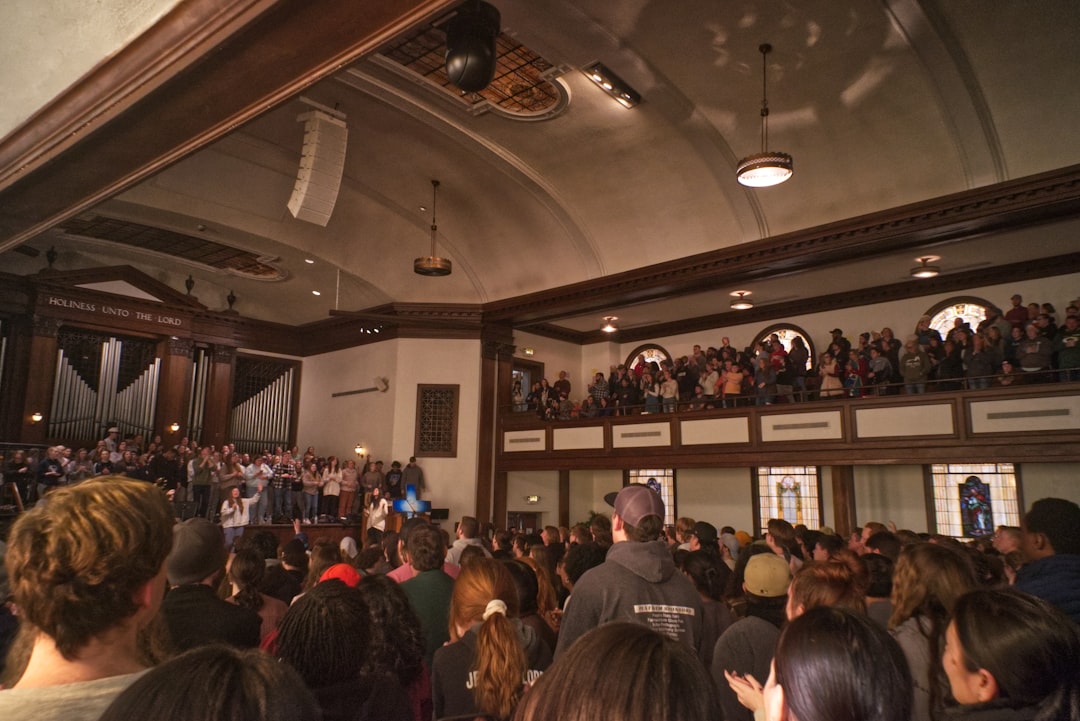
Individual campus outcomes tell a more encouraging story. Asbury University's 2025 Career Outcomes Report found that 99% of traditional undergraduates were employed or in graduate school within six months — well above the 85.7% national rate tracked by NACE. Graduates placed across business, education, healthcare, media, ministry, and public service, with 320+ hiring organizations represented.
Broader earnings data from the YouGov Holistic Impact Report 2025, conducted through St. Mary's University Center for Catholic Studies, found that 62% of Catholic university graduates live in households earning $100,000 or more, compared with 52% of secular graduates. Catholic graduates were also 7% more likely to view their careers as meaningful callings. Analysis from CollegeROIData, drawing on U.S. Department of Education College Scorecard data, confirms that major choice matters more than institution type: public university graduates carry average debt of $25,000 versus $27,000 at private institutions — a narrowing gap — but a computer science degree at a public school consistently outperforms low-demand majors at expensive private campuses.
Employers generally evaluate your skills, internships, and major — not the religious affiliation on your diploma. The degree is respected when the program is accredited and the graduate is prepared.
The Community Dividend You Cannot Put on a Spreadsheet
Not everything valuable about a Christian college shows up in a salary figure — and for many families, that is precisely the point.
According to the CCCU study, 61% of enrolled students cited faith-based culture as a key reason they chose their institution, and 35% cited a sense of community. That aligns with the YouGov Holistic Impact findings: Catholic college graduates were 14% more likely to report a strong sense of belonging, 17% more likely to be satisfied with their mental health, and 20% more likely to have volunteered in the last six months. They were also 22% more likely to say morality is extremely relevant in their decision-making.
For students who want spiritual formation woven into intellectual life — not as an add-on but as a daily rhythm — this is not a consolation prize. It is often the reason they enroll in the first place. Whether that dividend justifies higher tuition depends on how deeply you value it. And that is OK. There is no shame in wanting a paycheck-first path, and no shame in wanting a campus where faith is lived, not merely discussed.
Closures, Financial Stability, and What to Watch For
We would be careless if we ignored the harder truth: some Christian colleges are struggling, and a few have closed.
More than half of the 79 nonprofit colleges that have closed or merged since 2020 were religiously affiliated, according to The Hechinger Report. More than 30 religiously affiliated institutions still operating appear on a U.S. Department of Education list of not financially responsible institutions. BestColleges reports that at least 49 colleges have closed or announced closures since March 2020, with roughly 53,440 students impacted by private nonprofit closures. Federal Reserve Bank of Philadelphia modeling suggests that if enrollment drops abruptly, as many as 80 colleges could close, affecting more than 100,000 students.
Key warning signs include enrollment declining more than 25% over five years, tuition discount rates above 55%, or a Composite Financial Index below 1.0. Recent closures — including Trinity Christian College, Providence Christian College, and others — followed years of operating deficits, shrinking enrollment, and overreliance on a small donor pool.
Should you be worried? Not paralyzed — but informed. A school's mission statement is not a balance sheet. Look at both.
A Practice for Deciding With Clear Eyes
After years of watching families agonize over this choice, we have found that a slow, concrete practice helps more than any single ranking ever could. This is not a quick fix — it is something to walk through patiently, revisiting as new information arrives.
- Calculate net price, not sticker price. Request financial aid estimates from every school on your list. Compare what you will actually pay over four years, including room and board. The College Board data shows the private-public gap shrinks dramatically after grants — but only if you apply and receive aid.
- Investigate your intended major's outcomes. Use the College Scorecard to check median earnings and debt for your specific program. A nursing or computer science degree at a Christian university may pencil out beautifully; a less marketable major at any expensive school may not.
- Ask hard questions about stability. Request enrollment trends, graduation rates, and endowment size. If a school cannot answer clearly, that itself is an answer.
- Name what the community is worth to you. Sit with the question honestly: if career outcomes were identical at two schools, would faith-based culture change your daily life in ways you would miss elsewhere? There is no wrong answer — only an unexamined one.
- Visit, stay overnight if you can. Brochures cannot replicate the feeling of a chapel service at dusk or a dorm conversation about vocation. Give your gut something real to respond to.
- Build a backup plan. If your chosen school closes mid-degree — as some have — know which nearby institutions offer teach-out agreements. Providence Christian College's closure announcement included partnerships with Biola University, Concordia University, and The Master's University for continuing students.
So — Is It Worth It?
Christian colleges are worth the higher tuition for some students and not for others — and that nuance is the whole point. When aid closes the price gap, when your major leads to strong earnings, and when faith-based community matters deeply to you, the investment can make solid financial and personal sense. When sticker price stays high after aid, when your major has weak market demand, or when a school's finances look fragile, a public university or a more stable private option may serve you better.
The worst decision is one made from fear or from fantasy — either dismissing Christian colleges without running the numbers, or enrolling because the campus felt warm without checking whether the institution will still be standing in four years. You deserve better than either extreme.
May your choice be grounded, gentle, and yours.