
How Do I Keep One-Pot Pasta, Rice, and Meat from Overcooking?
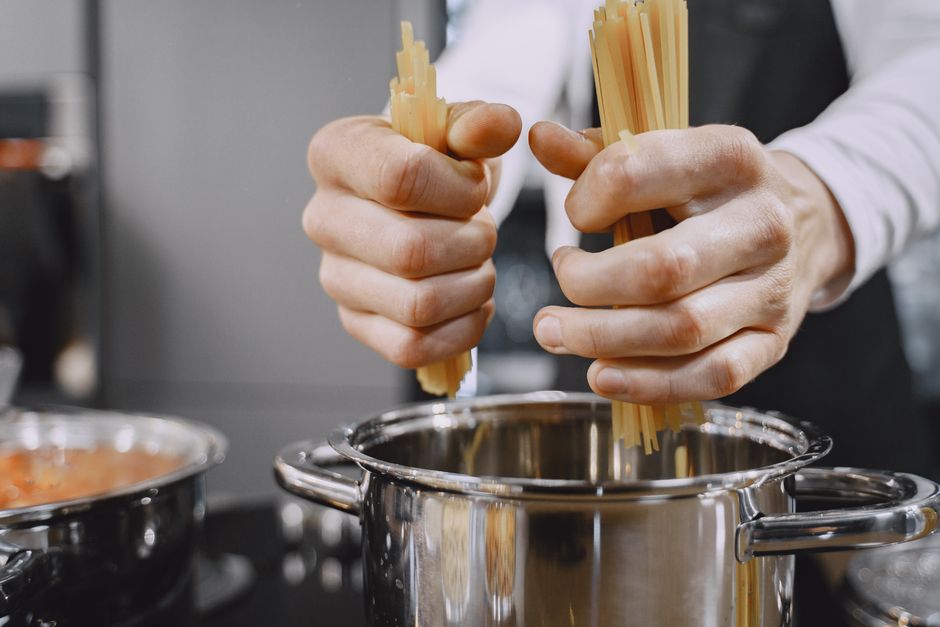
Keep one-pot meals even by matching liquid and cooking time to the ingredient: pasta simmers more slowly in sauce than in boiling water, and rice ratios vary by type. Add quick-cooking vegetables near the end. Cook poultry to 165°F (74°C), checked with a food thermometer. For firm rice, add a little liquid, cover, and cook longer; for excess liquid, uncover and simmer until it reduces.
Why does pasta turn mushy in one-pot recipes?
Pasta turns mushy when it stays in hot liquid after it reaches the texture you want. In a one-pot recipe, pasta cooks in sauce rather than a large pot of boiling water, so familiar package timing does not transfer neatly.
In a side-by-side test with penne, Serious Eats found that pasta simmering in sauce took longer to reach al dente than pasta boiled in water. At 14 minutes, the water-cooked pasta was nearly overcooked while the sauce-cooked pasta was just reaching al dente. Pasta keeps absorbing liquid as it cooks in sauce.
Shape and thickness affect when pasta becomes tender, so use the recipe’s time as a starting point, not a guarantee. Begin checking before the expected finish. If the pasta is close, lower the heat and check frequently; residual heat and continued soaking can push it past al dente.
Keep enough liquid in the pot for the pasta to cook, but do not treat all the liquid as disposable pasta water. The starch released into the sauce helps thicken it. If the pot looks dry while the pasta is still firm, add liquid in small amounts and continue cooking.
How much liquid should I use for one-pot rice?
Use the rice variety and its package directions to set the liquid ratio; a universal two-to-one rule does not fit every rice. Long-grain white rice commonly uses about two cups liquid per cup of rice, while brown, wild, and Arborio rice need different amounts and cooking times.
The USA Rice cooking chart lists long-grain white rice at 2:1 liquid to rice and 15–18 minutes. Its chart gives brown rice 2¼:1 and 40–45 minutes, wild rice 3:1 and 40–50 minutes, and U.S. Arborio rice 4:1 and 20–30 minutes. Those differences explain why swapping rice types without changing the method can leave one-pot meals uneven.
Guidance varies slightly by source. The University of Nebraska–Lincoln Extension gives long-grain rice 1¾–2 cups liquid per cup and about 15 minutes, medium- or short-grain rice 1½ cups and about 15 minutes, and brown rice 2–2½ cups with 45–50 minutes. The University of Maryland Extension gives a general starting point of 1 cup rice to 2 cups water and advises checking the package for the specific ratio.
| Rice type | Liquid per cup of rice | Approximate cooking time |
|---|---|---|
| Long-grain white | About 1¾–2 cups | About 15–18 minutes |
| Medium- or short-grain | About 1½ cups | About 15 minutes |
| Brown | About 2–2½ cups | About 40–50 minutes |
| Wild | About 3 cups | About 40–50 minutes |
| U.S. Arborio | About 4 cups | About 20–30 minutes |
These figures come from the cited cooking charts and are starting points, not a guarantee for every one-pot recipe. Follow the rice package when it gives a specific method. Keep the lid on while rice simmers, as USA Rice advises, because uncovering interrupts the covered cooking process.
If rice remains firm or liquid remains, the Nebraska–Lincoln Extension advises replacing the lid and cooking 2–4 minutes longer. For crunchy rice, USA Rice recommends adding liquid, covering tightly, and continuing to cook. That is a better fix than turning up the heat sharply, which can scorch the bottom before the grains soften.
Can raw chicken and rice cook together safely in one pot?
Raw chicken and rice can cook together only if the chicken reaches a safe internal temperature of 165°F (74°C). Check the thickest part with a food thermometer; appearance alone does not confirm safety.
FoodSafety.gov sets 165°F (74°C) as the safe minimum for chicken and other poultry, including breasts, thighs, and ground poultry. It also sets that temperature for casseroles containing meat or poultry. The guidance says to use a food thermometer to check whether meat has reached a safe minimum internal temperature.
Rice and chicken do not always finish at the same pace. Rice type changes the simmer time, while chicken pieces differ in thickness. Cut chicken into pieces of similar size to promote more even cooking, then check a thick piece with a thermometer near the end. If the rice is done first, remove the rice from direct heat while the chicken finishes safely; if the chicken is ready first, remove it and let the rice continue.
Choose the rice before you set the sequence. Brown rice takes far longer than white rice in the cited charts, so starting both raw chicken and brown rice together can leave one waiting while the other cooks. A one-pot method works best when ingredient timing agrees, or when the cook can add ingredients in stages.
For a practical sequence, start long-cooking ingredients first, then add faster-cooking components later. Add sturdy vegetables early enough to soften, and quick-cooking vegetables toward the end. Add pasta according to its own simmering time, and use a thermometer—not a visual guess—to decide when poultry is done.
Frequently Asked Questions
When should I add vegetables so they do not overcook?
Add quick-cooking vegetables near the end, when the grains or pasta are close to tender. Add firmer vegetables earlier so they have time to soften, and cut pieces evenly so they cook at a similar rate.
How can I fix a one-pot meal that is too watery?
If the pasta or rice is already tender, remove the lid and simmer so excess liquid can evaporate. Stir gently and check often; if the grains are still firm, keep the lid on and cook longer instead of draining away liquid they still need.
Sources
Wedding Catering: Choose a Service Style and Build Your Budget
Compare wedding catering styles, understand per-person averages, and check quotes, venue logistics, and dietary needs before signing.
What Can I Snack On for Protein, Sweetness, or Crunch?
Find no-cook protein snacks, sweet pairings, and salty crunchy options, with practical tips for fiber, portioning, and pantry staples.