
Could Painful Swallowing or Heartburn Be Esophagitis?
Painful swallowing or persistent heartburn can signal esophagitis from acid reflux, a pill that irritates the esophagus, infection, or eosinophilic esophagitis, an allergy-related condition. Symptoms overlap, so the pattern matters: food that sticks, pain with every swallow, vomiting blood, breathing trouble, or chest pain that lasts require prompt medical evaluation or emergency care.
What does esophagitis feel like compared with ordinary heartburn?
Ordinary heartburn is usually a burning feeling behind the breastbone that can rise toward the throat; esophagitis adds a sharper problem with the act of swallowing itself. The line is not perfect. Both can bring burning chest pain and reflux.
NIDDK lists heartburn and regurgitation as common GERD symptoms, along with chest pain, nausea, trouble swallowing, and pain while swallowing. That overlap explains why symptoms are clues, not a final label.
Esophagitis means the lining of the esophagus is inflamed. Mayo Clinic identifies reflux, infection, oral medicines, and allergies as major causes. The useful question is not whether the chest burns. It is what else occurs with it.
| Pattern | What the available sources connect it with |
|---|---|
| Burning behind the breastbone, reflux, regurgitation | GERD and reflux-related esophagitis |
| Pain or difficulty swallowing after a pill | Medicine-related esophageal injury |
| Food that will not pass | Esophagitis or a narrowed/changed esophagus that needs assessment |
| Ongoing swallowing dysfunction or repeated impaction | Eosinophilic esophagitis, confirmed through clinician-led biopsy testing |
Chest pain deserves its own rule. NIDDK advises medical evaluation for chest pain, while Mayo Clinic calls for emergency care when it lasts more than a few minutes. The symptom does not announce its cause.
Can acid reflux cause pain when I swallow?
Yes. GERD can cause pain while swallowing as well as heartburn, regurgitation, nausea, chest pain, and trouble swallowing, according to NIDDK.
Reflux-related esophagitis starts when stomach contents move upward and irritate the esophagus. NIDDK explains that GERD can develop when the lower esophageal sphincter weakens or relaxes at the wrong time. Obesity, pregnancy, smoking, hiatal hernia, and some medicines can contribute.
The symptom pattern still needs a clinician's read. Endoscopy can show changes in the esophagus and allow biopsies, while barium imaging can identify narrowing, structural changes, hiatal hernia, tumors, and other possible causes, according to Mayo Clinic.
For people balancing symptoms with shift work or changing schedules, reliable part-time work and scheduling can become part of the practical question. Persistent swallowing pain should not be reduced to a scheduling problem.
Why does food feel like it gets stuck in my throat?
Food can feel stuck when inflammation or narrowing interferes with its passage through the esophagus, and suspected food impaction needs emergency care. Mayo Clinic specifically says to get emergency care when food is thought to be stuck in the esophagus.
This is a dividing line. Heartburn can be painful; an obstruction can stop a swallow. Food impaction can occur with esophagitis, including eosinophilic esophagitis, and imaging or endoscopy can help a clinician look for narrowing or structural change.
Eosinophilic esophagitis cannot be diagnosed from a symptom checklist. The American College of Gastroenterology's 2025 guideline defines evaluation as symptoms of esophageal dysfunction plus at least 15 eosinophils per high-power field on biopsy, after alternative causes are excluded. The same 2025 guideline supports six targeted biopsies from two levels of the esophagus.
That distinction changes treatment. The guideline lists a proton pump inhibitor, swallowed topical steroids, or an empiric food-elimination diet as first-line EoE options, with dilation used alongside anti-inflammatory treatment when needed. Symptoms alone do not identify food triggers or prove that inflammation has resolved.
Can pills cause esophagitis, and how can I prevent it?
Yes. Pill-related esophagitis can occur when a pill or pill residue stays in contact with the esophageal lining.
Mayo Clinic names aspirin, ibuprofen, naproxen, tetracycline, doxycycline, potassium chloride, bisphosphonates, and quinidine among medicines associated with this injury. Taking pills with little or no water, lying down afterward, taking them before sleep, and swallowing large or unusually shaped pills raise the risk.
Prevention is physical, not dramatic. Mayo Clinic recommends an entire glass of water when medically appropriate and remaining seated or standing for at least 30 minutes after taking a pill. A prescriber or pharmacist can address whether a medicine, formulation, or swallowing method needs review; stopping or changing a prescribed medicine without that discussion can create a second problem.
Infection is another recognized cause of esophagitis. Biopsy testing can identify infection, eosinophils linked with allergy-related disease, or abnormal cells, which is why cause-specific treatment follows diagnosis rather than a guess.
Frequently Asked Questions
How long does esophagitis take to heal?
Healing time depends on the cause, the extent of injury, and whether treatment addresses that cause. Mayo Clinic describes treatment as a way to lessen symptoms, manage complications, and treat the cause; eosinophilic esophagitis also needs follow-up by endoscopy and biopsy rather than symptom relief alone.
When is painful swallowing an emergency?
Emergency care is warranted for chest pain lasting more than a few minutes, suspected food stuck in the esophagus, shortness of breath, severe symptoms after vomiting, or bloody or coffee-ground vomit, according to Mayo Clinic. NIDDK also identifies chest pain, swallowing problems, pain with swallowing, persistent vomiting, GI bleeding signs, loss of appetite, and unexplained weight loss as reasons for medical evaluation.
Could my swallowing symptoms be eosinophilic esophagitis instead of GERD?
Yes. Eosinophilic esophagitis can cause esophageal dysfunction and food impaction, and its symptoms can overlap with reflux. The American College of Gastroenterology's 2025 guideline requires symptoms plus biopsy findings of at least 15 eosinophils per high-power field after other causes are excluded, so symptoms cannot settle the diagnosis.
Sources
- National Institute of Diabetes and Digestive and Kidney Diseases: Symptoms and Causes of GERD
- Mayo Clinic: Esophagitis Symptoms and Causes
- Mayo Clinic: Esophagitis Diagnosis and Treatment
- American College of Gastroenterology: 2025 Eosinophilic Esophagitis Guideline Review
Disclaimer: This article is for general information only and is not medical advice. It is not a substitute for diagnosis or treatment by a qualified healthcare professional. Always speak to your doctor before acting on anything you read here.
Which Interdental Cleaner Fits My Teeth and Dental Work?
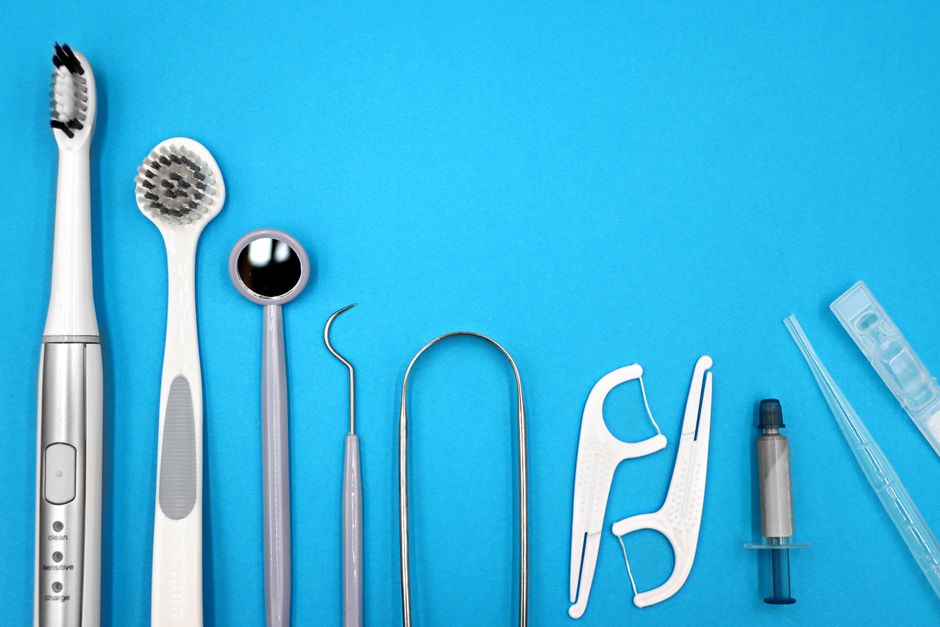
Choose floss, interdental brushes, or a water flosser based on gaps, braces, implants, gum recession, and hand control.