
Which Interdental Cleaner Fits My Teeth and Dental Work?
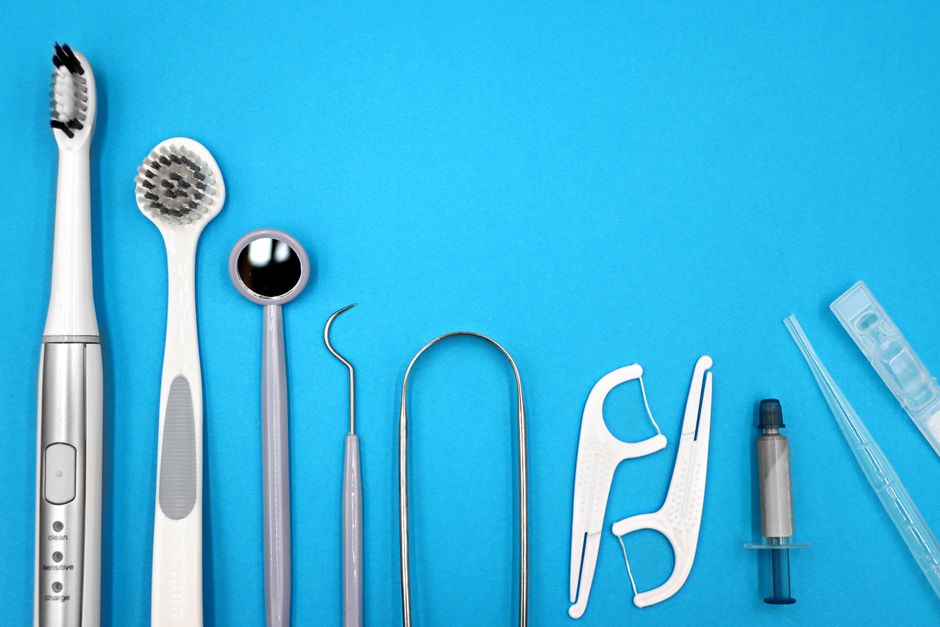
Use floss for tight tooth contacts, interdental brushes for open spaces caused by gum recession or periodontitis, and a water flosser when braces or limited hand control make string difficult. Dental work changes the choice: implant-safe coated brushes protect implant surfaces. The useful tool is the one that reaches the space without force and can be used every day.
Is a water flosser as effective as string floss?
No single answer fits every mouth. A water flosser is an interdental cleaner, yet the evidence does not establish it as a universal substitute for string floss.
The 2019 Cochrane review, which included 35 randomized controlled trials and 3,929 randomized adults, found low-certainty evidence that oral irrigators gave no added reduction in bleeding sites or plaque at one month compared with toothbrushing alone. Its comparisons between irrigators and floss were low to very low certainty. The Cochrane Oral Health review therefore leaves no basis for a simple winner.
Access changes the decision. The ADA News guidance names braces, dexterity problems, and disabilities as barriers to traditional floss. A water flosser can be the workable route when hands cannot guide string through each contact. It still does not erase the need to match a cleaner to the space.
The ADA advises brushing twice daily and cleaning between teeth once daily with floss or another interdental cleaner. A routine that cannot reach the gap is not a routine. It is a ritual.
Are interdental brushes better than floss for larger gaps?
For larger, open gaps, interdental brushes fit the evidence and the anatomy better than floss. The American Dental Association states that floss is indicated for tight interdental spaces, while interproximal brushes suit people with periodontitis or more open spaces.
This is not a contest between tools. A mouth can have tight contacts in one area and wider spaces in another. The ADA notes that people can use both floss and brushes for different needs.
The Cochrane review found low-certainty evidence that interdental brushes may reduce gingivitis more than floss at one and three months, though plaque results were inconsistent. That result supports a practical rule: choose the tool that fills the space gently, rather than treating one tool as the answer for every tooth.
| Situation | Tool that fits the supplied guidance | Critical limit |
|---|---|---|
| Tight tooth contacts | Floss | Guide it gently around each tooth. |
| Open spaces, gum recession, or periodontitis | Interdental brush | Use a snug fit; never force it. |
| Braces or limited dexterity | Water flosser or another manageable interdental cleaner | Use it as part of daily between-teeth cleaning. |
| Implants | Brush designed for implants, where suitable | Coated wire can reduce scratching or galvanic shock. |
A change in gum line creates a change in cleaning space. The tool follows the space.
What should I use to clean between teeth with braces?
With braces, use an interdental method you can control around the appliance, with a water flosser as one option when string floss is hard to maneuver. The ADA identifies braces as a common obstacle to traditional flossing.
String still has a place where it can pass through a tight contact. The National Health Service describes the technique: use 30 cm to 45 cm of floss or tape, keep 3 cm to 4 cm taut, curve it in a C-shape around each tooth, then move it gently up and down. Sawing hard against the gums defeats the point.
Interdental brushes can reach some spaces around orthodontic hardware. They are not string floss with a handle. The ADA News guidance warns that forcing the wrong size can damage gums; it also notes that a brush can be bent to improve access to back teeth.
Work schedules often turn small care tasks into skipped tasks. The same practical test used when weighing a part-time job that fits your schedule applies here: choose a method that fits the time and hand movement available, then confirm the fit with a dentist or hygienist.
How do I choose the right size interdental brush?
Choose the smallest interdental brush that fits snugly without being forced. The NHS says a brush should fit snugly between teeth, and the ADA advises starting with the smallest size.
Insert the brush with light pressure. If it will not enter, do not push. If it passes through with no contact, it is not cleaning the sides of the space well. Different gaps can need different sizes, so one package is not proof of one correct size for the whole mouth.
Professional sizing has a clear role. The NHS says a dentist or hygienist can advise on the best method for an individual's mouth. This matters with gum recession, periodontitis, implants, bridges, and areas that bleed or hurt.
Bleeding is information. The NHS gum disease guidance lists bleeding during brushing, flossing, or eating hard foods among symptoms of gum disease, along with red, swollen, and sore gums. It advises seeing a dentist for bleeding gums, painful or swollen gums, or bad breath.
Frequently Asked Questions
Can I use a water flosser around implants, crowns, or bridges?
A water flosser is one type of interdental cleaner, and the ADA includes water flossers among tools for cleaning between teeth. The supplied evidence does not give a device-specific rule for every implant, crown, or bridge design. For implants, the ADA notes that brushes designed for implants can use coated wire to reduce scratching or galvanic shock; a dental professional can identify the suitable method for the restoration.
Why do my gums bleed when I start flossing?
Bleeding when brushing or flossing is listed by the NHS as a symptom of gum disease, alongside red, swollen, or sore gums. Plaque left behind after brushing and between-teeth cleaning can irritate gums. The NHS advises dental care for bleeding gums, painful or swollen gums, or bad breath.
Is flossing enough if I cannot grip or maneuver string floss well?
Traditional string floss is not the only interdental cleaner. The ADA identifies braces, dexterity problems, and disabilities as barriers to string floss, while floss, interdental brushes, and water flossers are all interdental-cleaning options. The best method depends on the spaces, dental work, and a clinician's guidance.
Sources
- American Dental Association: Floss
- Cochrane Oral Health: Home use of devices for cleaning between the teeth
- National Health Service: How to keep your teeth clean
- American Dental Association News: Choosing an interdental cleaning method
- National Health Service: Gum disease
Disclaimer: This article is for general information only and is not medical advice. It is not a substitute for diagnosis or treatment by a qualified healthcare professional. Always speak to your doctor before acting on anything you read here.